Archive

Posts Tagged ‘President Barack Obama’

President Barack Obama Wins Reelection; Now Comes The Fiscal Cliff

November 9th, 2012


The results of America’s 2012 presidential election were barely finalized when the political establishment immediately shifted gears, now focusing on what is being referred to as the nation’s “fiscal cliff.” This dire term involves a convergence of two hour glasses running out of sand. One is expiration of the so-called “Bush tax cuts,” the radical reduction in upper income taxation during the Bush presidency that transformed America’s fiscal balance sheet from questionable surplus (only surplus with fuzzy accounting on future Medicare and Social Security obligations). The other is the automatic cutbacks in federal spending that take effect without a negotiated bipartisan deficit reduction agreement

Washington’s massive structural mega-deficits are unsustainable. However, a radical, unplanned reduction done like cold turkey will crash the economy, resulting in a revenue shortfall  for the government, and the retention of a massive deficit.

How will the politicians in Washington DC behave? Like adults? Possibly, because of market terror at the alterative. However, with the Republican Party very bitter towards President Obama for having the audacity to defeat his GOP challenger, don’t be too hopeful that the GOP will put aside its political agenda for the national interest.


WALL STREET KILLS--A CHILLING NOVEL ABOUT WALL STREET GREED GONE MAD

 To view the official trailer YouTube video for “Wall Street Kills,” click image below:

In a world dominated by high finance, how far would Wall Street go in search of profits? In Sheldon Filger’s terrifying novel about money, sex and murder, Wall Street has no limits. “Wall Street Kills” is the ultimate thriller about greed gone mad. Read “Wall Street Kills” and blow your mind.


photo

global economic crisis , , ,

U.S. Economic Crisis and the 2012 Presidential Election

January 11th, 2012

In my last post, I wrote:  With 2012 a presidential election year in America, expect the Obama administration to spin economic data seven ways to Sunday in an effort to make things look more rosy. Thus, an unprecedented reduction in the total size of the American work force is twisted into a lowering of the unemployment rate.” Right on cue, the Bureau of Labor Statistics issued an rose-tinted jobs report, showing a decline in the U.S. unemployment rate while the private sector was creating 200,000 new jobs in the last month.

No doubt, President Barack Obama would like nothing more than to reverse the disastrous employment picture in the United States. But he is caught in a trap, one only partially of his making. The American economic  order he inherited, and which Obama is unable to transform beyond minor cosmetic alternations, is a de-industrialized, financialized monstrosity. No wonder his minions are reduced to creative bookkeeping to show that jobs are in fact being created and an economic recovery is truly underway. The reality is that the percentage of Americans of working age participating in the workforce is at a record low, overall labor wages are stagnant or declining and there are no indications that this is being changed.

And what about Barack Obama’s Republican would-be challengers? GOP frontrunner Mitt Romney may boast of his “business experience,” though in reality the man from Bain Capital is nothing more than a poster child for the domination of financialization over the manufacturing sector in the United States. Other Republicans seeking the GOP presidential nomination such as Newt Gingrich are offering the same old mantra of infinite tax cuts for the mega-wealthy of America and trickle-down economics for everyone else.

Between President Obama and his GOP rivals, I see no one with the transcending vision and leadership skills to undertake the massive economic changes required to restore America’s economic and fiscal health.


global economic crisis , , , ,

“Occupy Wall Street” And Mass Arrests In New York City: Is This The Start of a Revolution?

October 3rd, 2011


For about two weeks, a seemingly spontaneous protest movement has evolved in the financial district of New York, dubbing itself the “Occupy Wall Street Movement.” Supposedly leaderless, there seems to be a core of ideologically committed individuals utilizing social media to empower a protest movement aimed squarely at the financial oligarchy that dominates the American political establishment, and particularly its economic and fiscal policymaking. The organizers of this self-described “leaderless” movement openly state that their methods are inspired by the protest movement of the Arab Spring.

On Saturday, October 1 more than 700 protesters were arrested by the New York Police Department. Previously, the NYPD had been accused by not only the protesters but media observers of engaging in brutality and unwarranted violence against peaceful protesters.  It is not likely that the mass arrests will attenuate these protests; the opposite actually seems to be the case.

Why is the “Occupy Wall Street Movement” protesting in Manhattan’s financial district? The website of the movement states:

Occupy Wall Street is a leaderless resistance movement with people of many colors, genders and political persuasions. The one thing we all have in common is that we are the 99 percent that will no longer tolerate the greed and corruption of the 1 percent.”

While it is too early to determine the future course of this movement, and whether or not it is a flash in the pan or a self-sustaining phenomenon that could lead to a full-scale national, revolutionary mass protest movement, I think the following observation is in order. The arrest of 700 plus protesters on the Brooklyn Bridge in the brief period of an afternoon is not an everyday occurrence  in the United States. The fact that so many middle class and especially younger people are out on the streets openly railing against America’s financial oligarchy is at the very least a concrete manifestation that in the economic depression that has swept the land, the emerging generation of Americans has lost faith in the country’s politicians, feels alienated from the political culture and is increasingly hostile to those it perceives as the wire-pullers of the nation’s economic and political life and dispossessors of the future for the vast majority of Americans. Though the movement describes itself as leaderless, should a leadership emerge this movement has the potential to grow and morph into a revolutionary form of resistance to the ruling circles of contemporary America. If that happens, based on the police response to date, will those who dominate decision-making in America  unleash repression to suppress this movement? Time will tell, but as America’s economic situation grows worse and President Barack Obama’s mantra of hope and change becomes increasingly dysfunctional and irrelevant, the potential for massive social unrest in the United States grows and may eventually reach a point of critical mass, leading to unforeseen but potentially radical consequences.


photo


Uncategorized , , , ,

President Barack Obama and America’s Jobs Crisis

September 1st, 2011

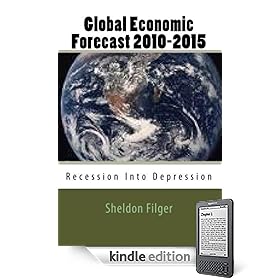
As I predicted in my book, “Global Economic Forecast 2010-2015: Recession Into Depression,”  President Obama’s $787 billion stimulus package has been a conspicuous failure in positively impacting the staggeringly high rate of unemployment in the United States. As is well known, massive job losses occurred in rapid order after the financial calamities of mid and late 2008. I projected in my book that at a vast price in expanded public debt, at best the Obama administration would stabilize unemployment rates at an historically high level.

Now we have the drumbeat of the 2012 presidential campaign sounding louder. Barack Obama is an astute politician, and knows his chances of being reelected to a second term are dismal unless he can tackle, or seem to be tackling America’s jobs crisis. In that connection, Obama has announced he will make a speech to a joint session of Congress on September 7. The speculation is that he will propose  tax credits for companies that add workers to their payrolls, and stimulus spending on infrastructure. With the Republicans controlling the House of Representatives, there is no chance he will get any serious legislation passed involving additional spending. At best, the Obama speech that is pending is an electioneering gimmick, and will prove as effective as the administration’s  overall economic crisis policy.  In the meantime, while the president drafts his speech and the political establishment engages in its usual partisan games, a growing group of leading economists are forecasting a double dip recession in most advanced economies, including the United States. That increasingly likely development will have more impact on the jobs crisis than even one thousand presidential speeches.


photo


global economic crisis , ,

President Sarah Palin Video

May 23rd, 2011

A new video on YouTube provides a unique overview of my political novel, “Sarah Palin Apocalypse Americana.” An animated version of Sarah Palin provides a synopsis of my book, based on Sarah Palin being elected 45th president of the United States after winning the GOP presidential nomination and defeating President Barack Obama in the general election due to a continuing economic crisis and high unemployment.

The link to the YouTube video of President Sarah Palin reviewing “Sarah Palin Apocalypse Americana” is here:    http://www.youtube.com/watch?v=ECeCKD1ZZxE

Click to watch this video

global economic crisis , ,

Obama’s Top Economic Advisors Start Abandoning a Sinking Ship

August 9th, 2010

Within the past  few days, two of the four most important economic advisors and policymakers within the Obama administration have resigned. They are Peter R. Orszag, budget director at the U.S. Office of Management and Budget, otherwise known as OMB, and Christina Romer, who chairs the Council of Economic Advisers. Remaining on the economics team is Treasury Secretary Timothy Geithner and Larry Summers, Director of the White House National Economic Council. Supposedly, Romer and Orszag are leaving of their own accord, to pursue “other opportunities.” Some speculate that policy differences with Larry Summers and even President Barack Obama were a factor. My own sense is that the worsening economic crisis in the U.S. as well as the overall global economic crisis were leading factors in their resignations, amid the increasing evidence that massive increases in public debt by Washington has not only failed to end the recession and restore robust economic growth; the risk of a sovereign debt crisis in the United States is now a reality.

The resignations of Romer and Orszag are the first ramifications of a failed economic policy. The more tangible result will be the upcoming midterm congressional elections in the U.S., which will almost certainly witness the Democrats losing control of the House of Representatives. From there, things will get worse, as America enters a double-dip recession, while Congress is mired in gridlock and imposes paralysis on the remaining two years of Obama’s presidential term.

As the economic clouds darken in America, it is likely that the resignations of Orszag and Romer are the crest of a wave.

Tập tin:ChristinaRomer 20090105 EconMeeting-9208.jpg

global economic crisis , , , ,

Is President Obama’s Attempt to Contain Iran’s Nuclear Ambitions Doomed to Failure?

September 26th, 2009

When President Barack Obama, flanked by his leadership colleagues attending the G20 Summit in Pittsburgh, made his dramatic announcement regarding Iran’s covert second site for uranium processing, he did so with a high degree of credibility. Not wishing to follow the fanciful nuclear allegations made by the Bush administration to justify its invasion of Iraq, President Obama and his advisors deliberated for several months with  the U.S. intelligence community before being persuaded of the true purpose underlying a secretive underground facility being constructed by the Iranian regime outside the holy city of Qom.

The carefully worded statement by the president telegraphs an unambiguous message to the international community, and especially to those nations most concerned with the dangers of nuclear proliferation. The configuration of the Iranian nuclear facility, apparently built in violation of Tehran’s commitments to the International Atomic Energy Agency, makes it unsuited for any possible civilian purposes. However, once in operation, it would be ideally suitable for constructing at least one fission nuclear warhead per year.

Once the Iranian ruling elite realized that their secret facility was about to be unveiled, they hurriedly informed the IAEA that, apparently, they had regrettably forgot to inform the UN’s nuclear watchdog that a second uranium processing plant was being built. The fact that it was being constructed underground, below a mountain, was in no way indicative that this was anything other than a peaceful nuclear project, so claim the Iranian authorities.

No serious government believes the Iranian rationalizations, not even the Russians, who up till recently were opposed to imposing severe economic sanctions on Tehran. However, the apparently unassailable intelligence data on the nature of the nuclear facility near Qom has convinced even Moscow that sanctions may be warranted. That apparently is the hope of Washington, with the momentum now in place for a deadline that would place Iran under a sanctions regime by December, unless it is in compliance with all UN resolutions regarding her uranium enrichment program.

As laudable as President Obama’s intentions are on resolving the Iranian nuclear issue through diplomacy, I believe recent history does not leave grounds for optimism. Economic sanctions are only effective if they are imposed on a regime that is susceptible to domestic public pressure. In the case of  a Iran, the fixing of the recent presidential election and brutal suppression of public protest at having their votes disregarded  is clear evidence that the theocratic elite in Tehran does not factor in public opinion when formulating policy. Furthermore, the scope of and immense financial investment being made on the Iranian nuclear project, at a time when that nation’s economy is experiencing high unemployment and rampant inflation, is incontrovertible proof that acquiring nuclear weapons, and the missile technology to deliver atomic warheads to distant targets, is that regime’s top priority.

For more than a decade, the international community has imposed draconian  economic sanctions on North Korea in an effort to contain Pyongyang’s nuclear weapons program. The North Korean economy is a basket case, yet that reality has in no way restrained the nuclear ambitions of a regime that sees nuclear weapons as its best insurance policy for survival. The North Korean example would seem to suggest that when a dictatorial regime, immune to internal public opinion, is determined to develop nuclear weapons, economic sanctions are an ineffective policy response. There is every likelihood that Iran’s theocratic leadership is similarly immune to economic pressure, and sees diplomacy as merely a delaying tactic, to buy time while Tehran rushes forward with its covert uranium enrichment activity.

If in fact sanctions do not  impede Iran’s nuclear goals, what is likely to happen? Based on Israel’s aggressive non-proliferation policy  in the Middle East, and how they perceive the Iranian nuclear threat, it is unlikely they will remain passive if it appears that Tehran is on the verge of becoming a nuclear power. If the only alternative to an Iranian nuclear weapon is an Israeli attack on Iran, there should be no illusions about the Iranian reaction. They are likely to strike back not only at Israel, but at every Western country, most probably by mining the straits of Hormuz and attacking oil tankers in the Persian Gulf. The economic crisis the world is currently enduring will be massively exacerbated, with oil prices rising through the stratosphere. It is not inconceivable that a long-term regional war will erupt, while the global economy enters a tailspin.

It is not pleasant to contemplate the strong possibility that economic sanctions will fail to thwart Iran’s nuclear weapons program. However, the real world of geopolitics is often unpleasant, and frequently ugly. As painful  as it is, I hope that Washington is contemplating other options besides economic sanctions.  Otherwise, the Obama administration and the international community will, in effect, make a decision that the Israelis should handle the Iranian nuclear problem, and allow all the horrific yet predictable consequences to ensue.

global economic crisis , , , , , ,